PROPOSAL
For business leaders who seek real change, not "paper" strategies on the shelf.
Turn your strategy into an effective execution system in 30 days
Strategy OS: step-by-step technology for transforming strategic goals into predicted results.
Join 500+ Executive Teams
High Efficiency Metodology
30 Days Money Back Guarantee
Instant Strategy Toolkit Access

18+
Years of Experience
50+
Transformation Project Done
98%
Average
Project ROI
500+
Business Leaders Trained
THE PROBLEM
Your strategy session went well. The team is involved. The ideas are strong. The document is ready.
But 3 months later…
Strategic changes are not happening
Most initiatives either did not start or
"froze" somewhere in the approval process.
Initiatives freeze mid-process
Most initiatives either did not start or got stuck in the approval process.
Strategy dies in spreadsheets
Weeks of work, but the team still doesn't understand the priorities.
Firefighting replaces strategy
Projects get delayed and you end up back at firefighting instead of strategic development.
Nothing changes
Every month without a systemic rhythm is wasted time. Money slips through fingers and the team's energy spills over hundreds of small tasks. The company operates the same as before the planning began. Sounds familiar?
It's not about the people. And it's not about the quality of the ideas.
The company operates the same as before the planning began. Sessions happen. Documents get created. Meetings are held.
But there is no operational mechanism that translates strategic decisions into a predictable outcome — a system that keeps the team in a single context between sessions.
— The reality for 8 out of 10 companies after strategy sessions.

CHAOS WITHOUT SYSTEM
GOOD STRATEGIES DIE HERE
PREDICTABLE EXECUTION
In a year — if nothing changes — you will find yourself at the same point. Exhausted.
With a team that is "trying" hard and a business that is reaching its limit.
EXPRESS CHECK-UP
Key "signs" that a strategic execution system is missing
If you recognize more than three signs, your strategic execution system needs significant changes.
Chaos of priorities
Five Top Managers — five different answers to 'What is the company's top priority right now?'
Project cemetery
Half your projects have been 'in progress' for six months. Nothing is officially closed. Everything is “on hold”.
Dead strategy
The strategy document was last opened a week after the session ended. No system mechanism to keep the strategy alive.
Budget inertia
Budgets are distributed the same as last year, with minor adjustments in favor of the one who asked the most.
Persistence of problems
The same issues are discussed on regular meetings quarter after quarter in new 'clothes.'
Cognitive gap
Ask three people about the strategy — get three different versions. There is no single, operationally viable version.
Operation trap
A strategic project is stuck because the owner is 'too busy with operations' and no one can resolve this system problem.
Talent drain
Good people leave because they 'didn't see the direction' and don’t tolerate chaos of priorities.
Culture of excuses
Quarterly reviews become a forum for excuses, not course correction. It turns into a defensive meeting.
The problem is not the strategy. You have enough of it...
You already know where you want to go.
The problem is another: there is no mechanism between strategic intent and operational reality.
This is not solved by a new strategy session or motivational event.
This is not solved by the OKR framework or another planning methodology.
This is solved by a system that must be “installed” into the rhythm of the company's work.
Strategy OS
IT IS THIS SYSTEM THAT CREATES THE RHYTHM OF STRATEGY IMPLEMENTATION
Not another course you take and forget.
Not a framework for the next strategy session.
This is an operating system for strategy execution — a step-by-step methodology developed by OD&D Agency based on real-world experience in transforming organizations from media holdings to diversified industrial groups.
Оберіть свій формат впровадження
The Bridge Between Strategic Chaos and Execution
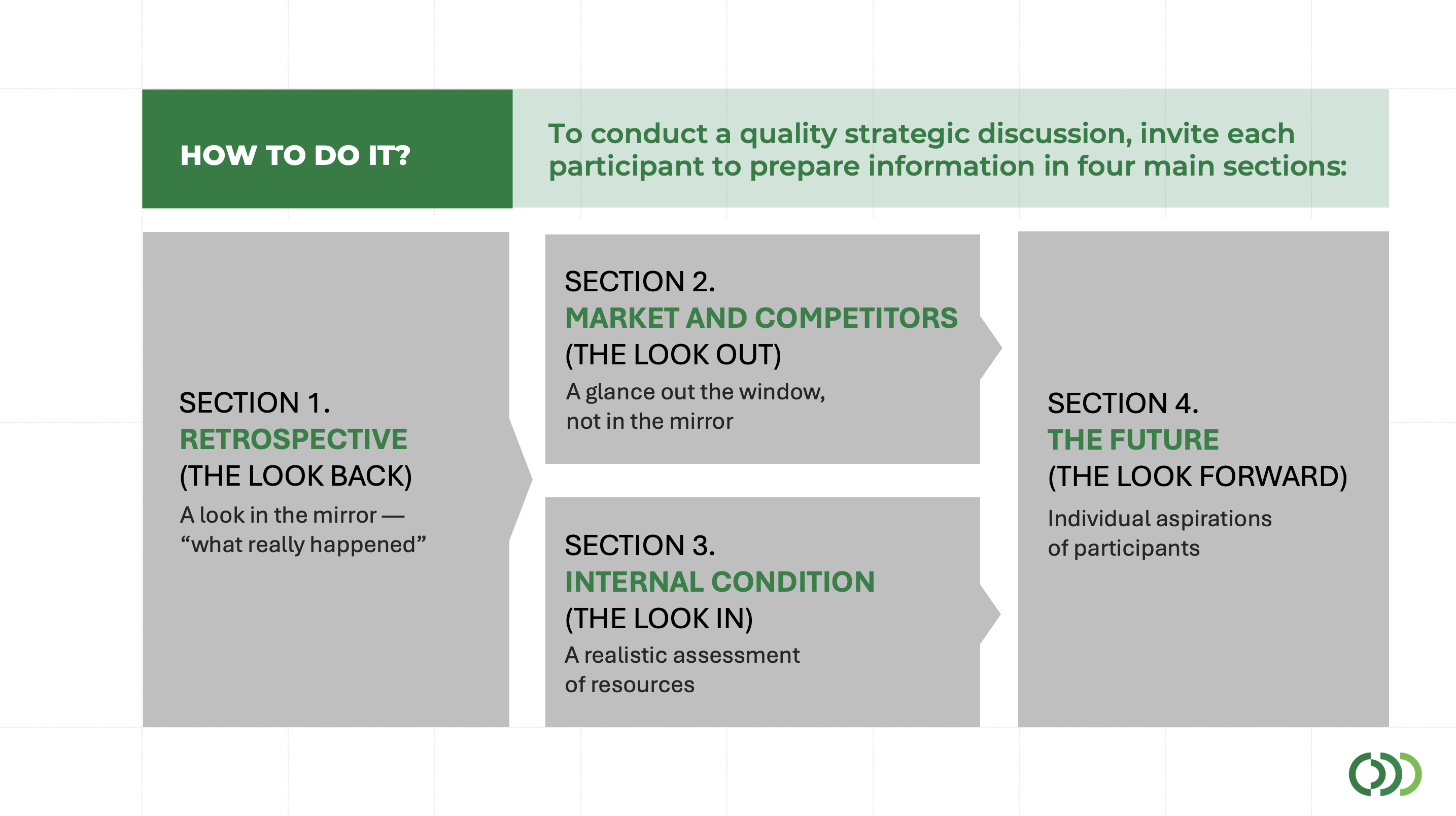
7 interconnected phases that close a specific gap between intent and outcome — in a format that the management team deploys independently
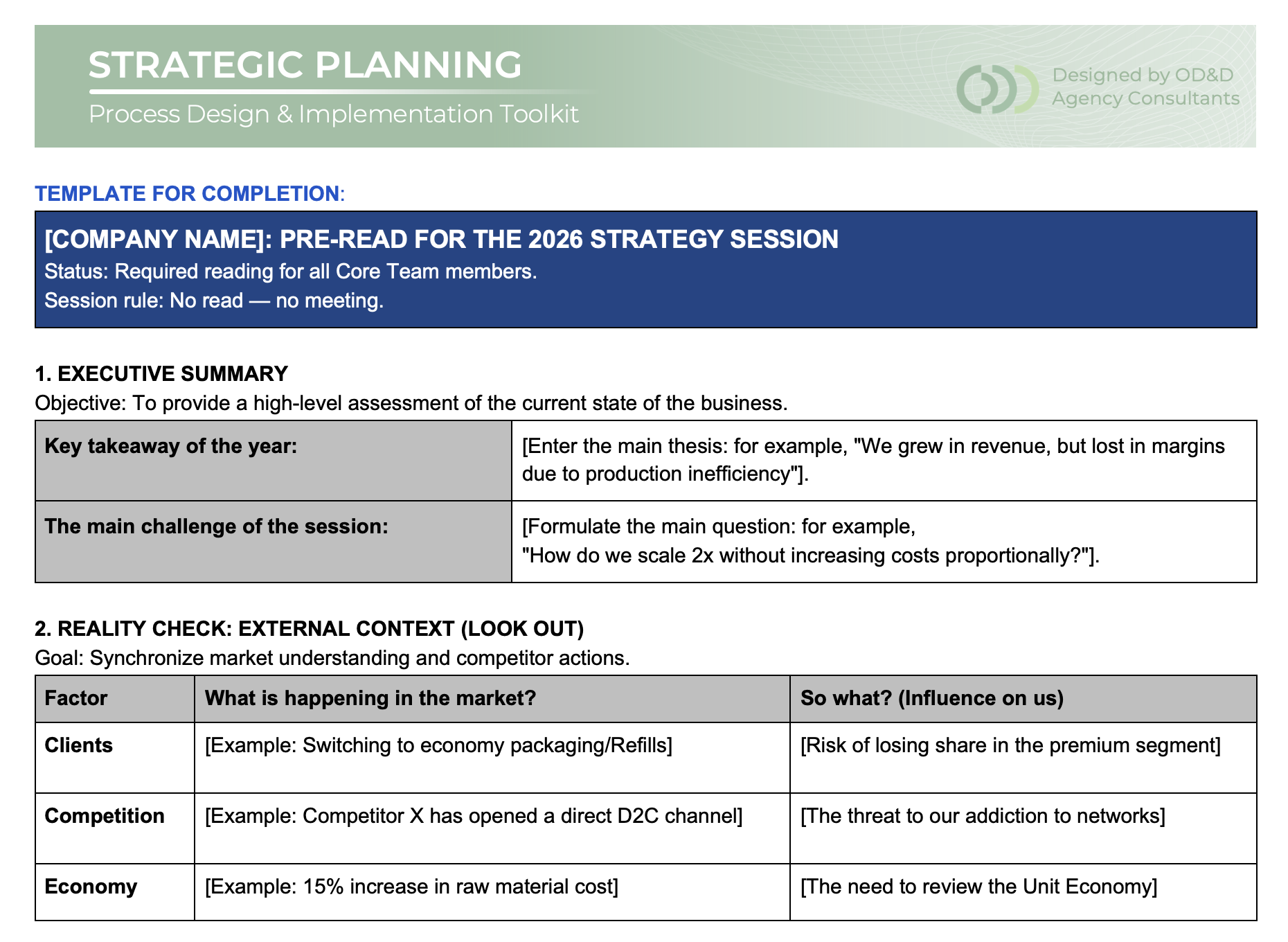
Phase 00
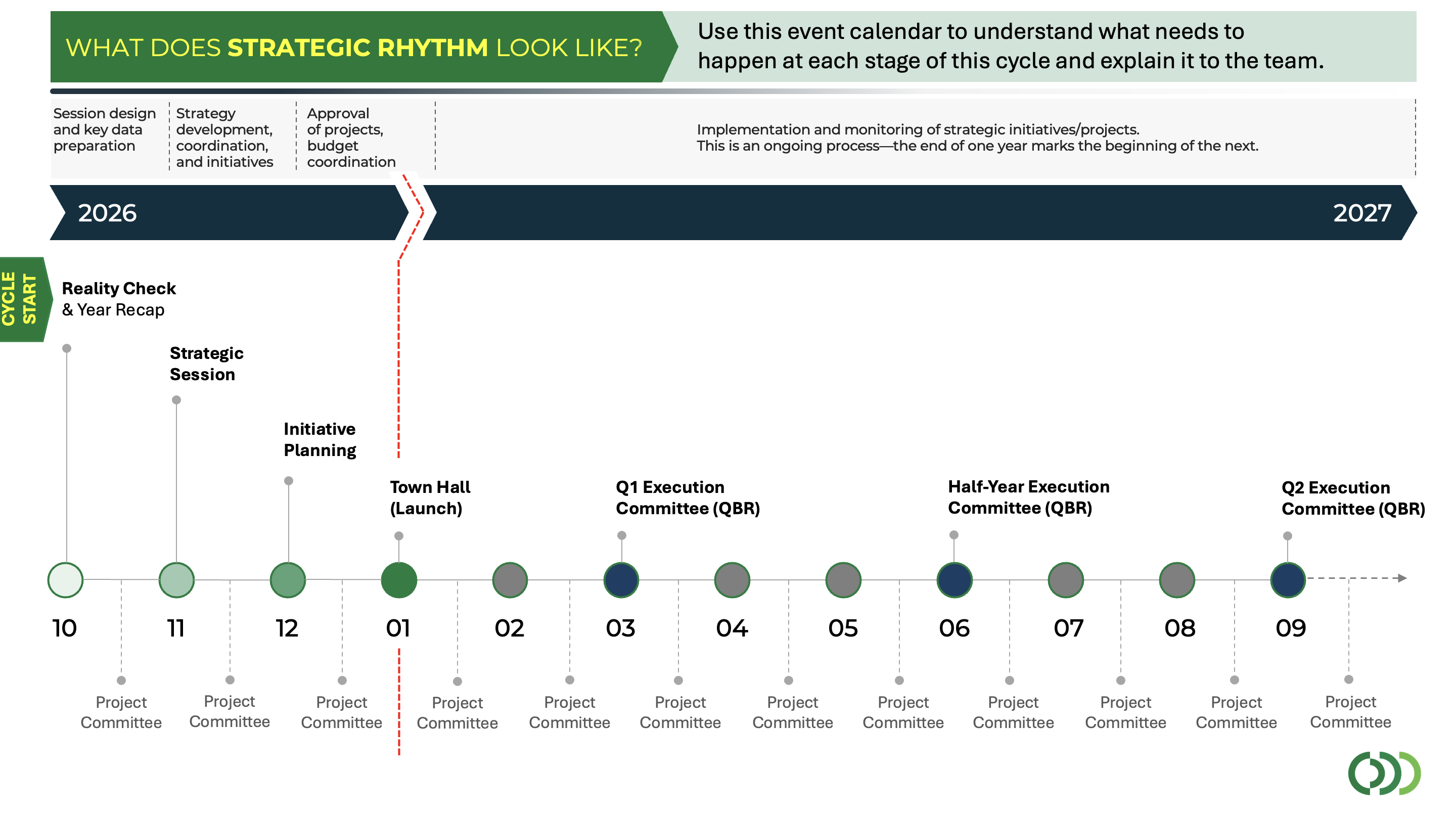
Strategic Rhythm
Phase 01
Reality Check
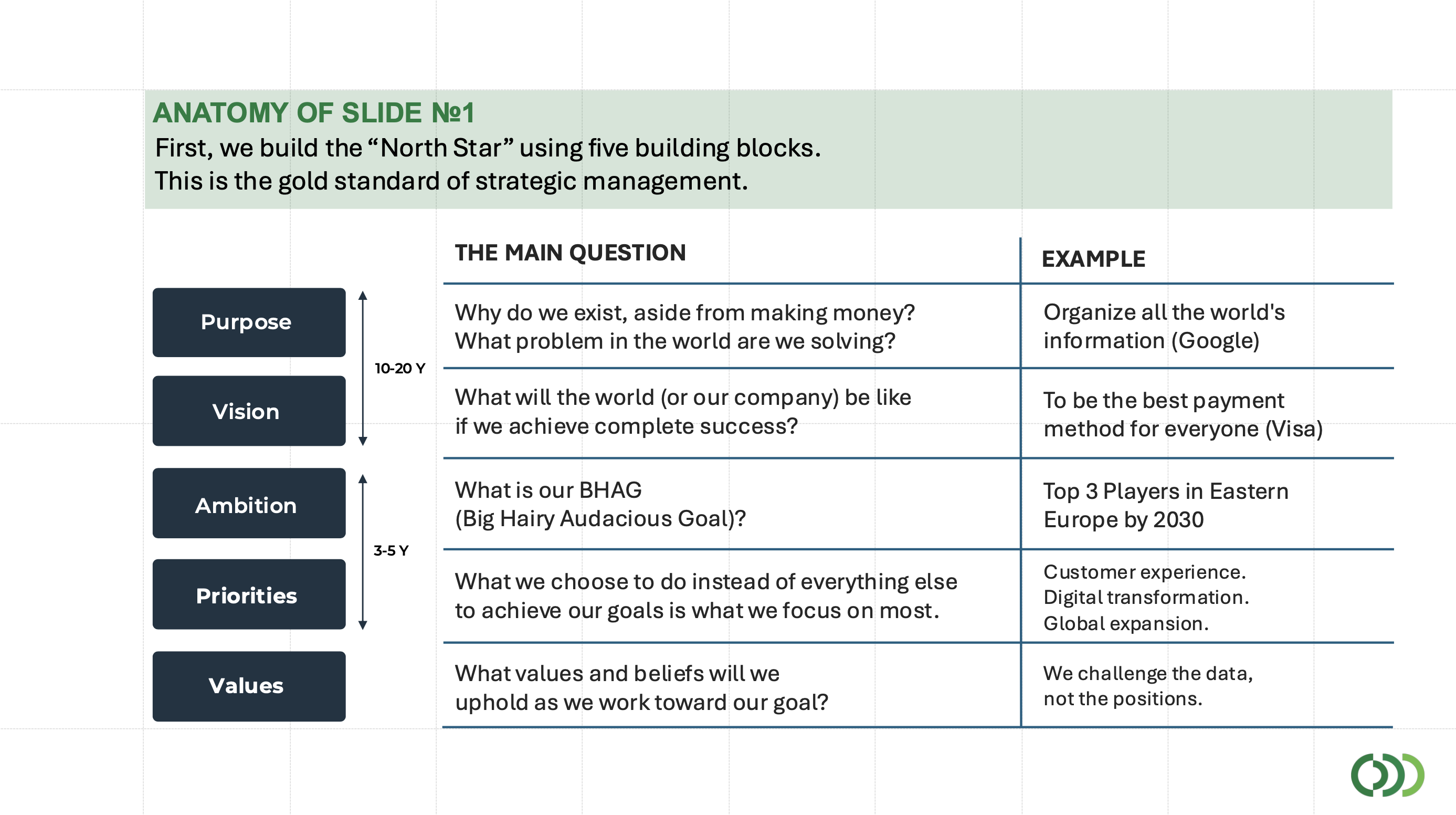
Phase 02
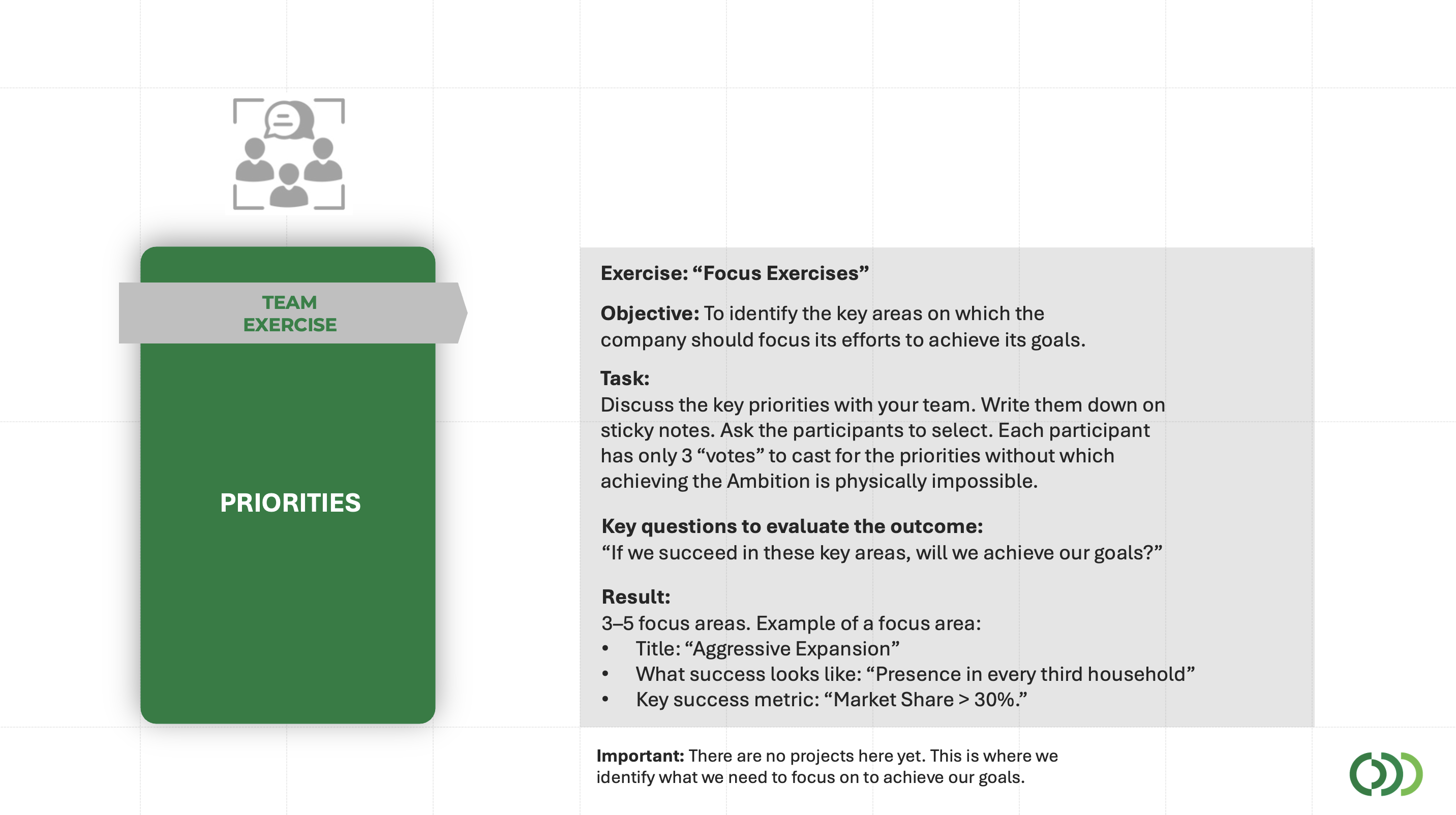
The Core (North Star)
Phase 03
Initiative Planning
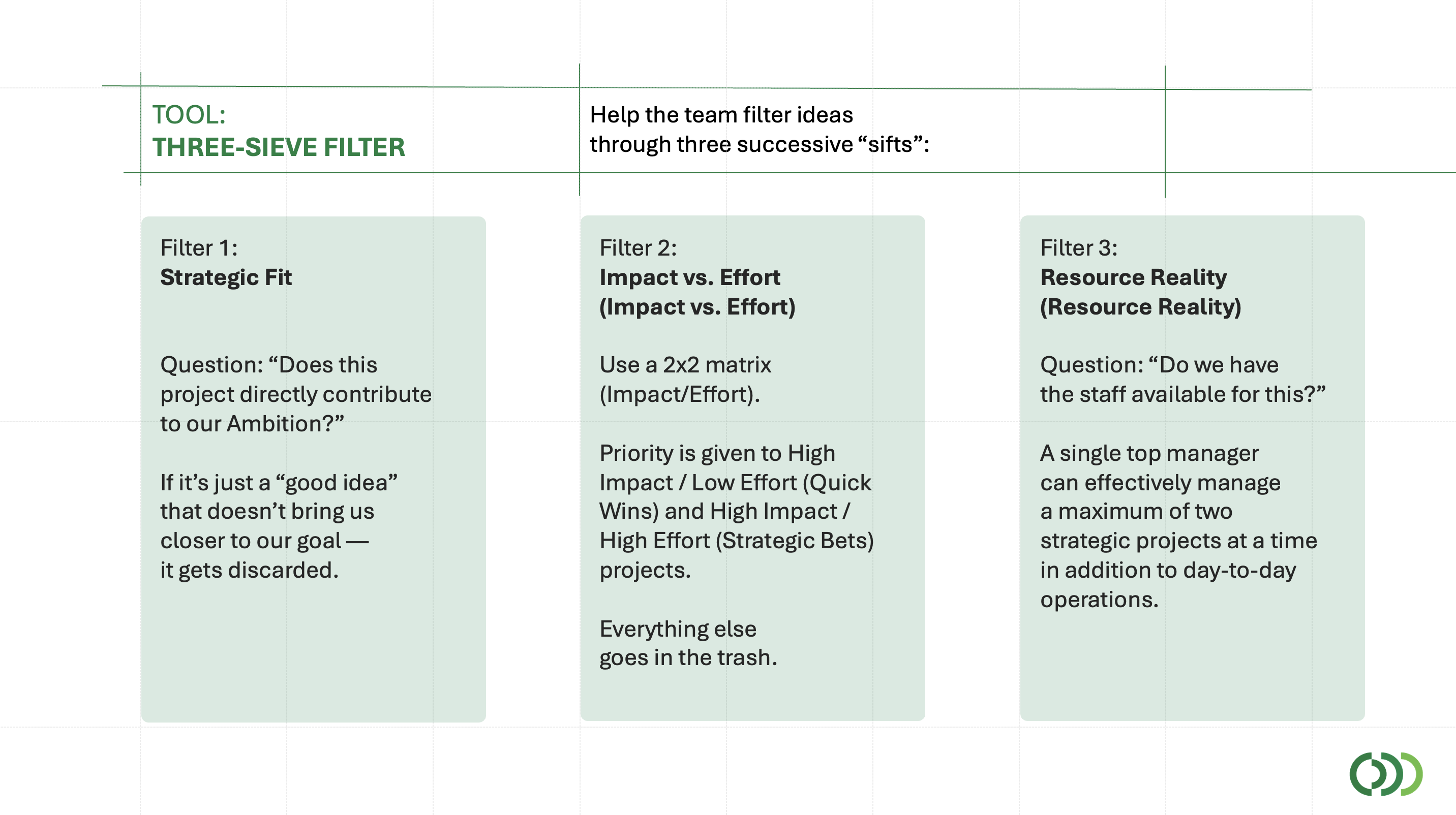
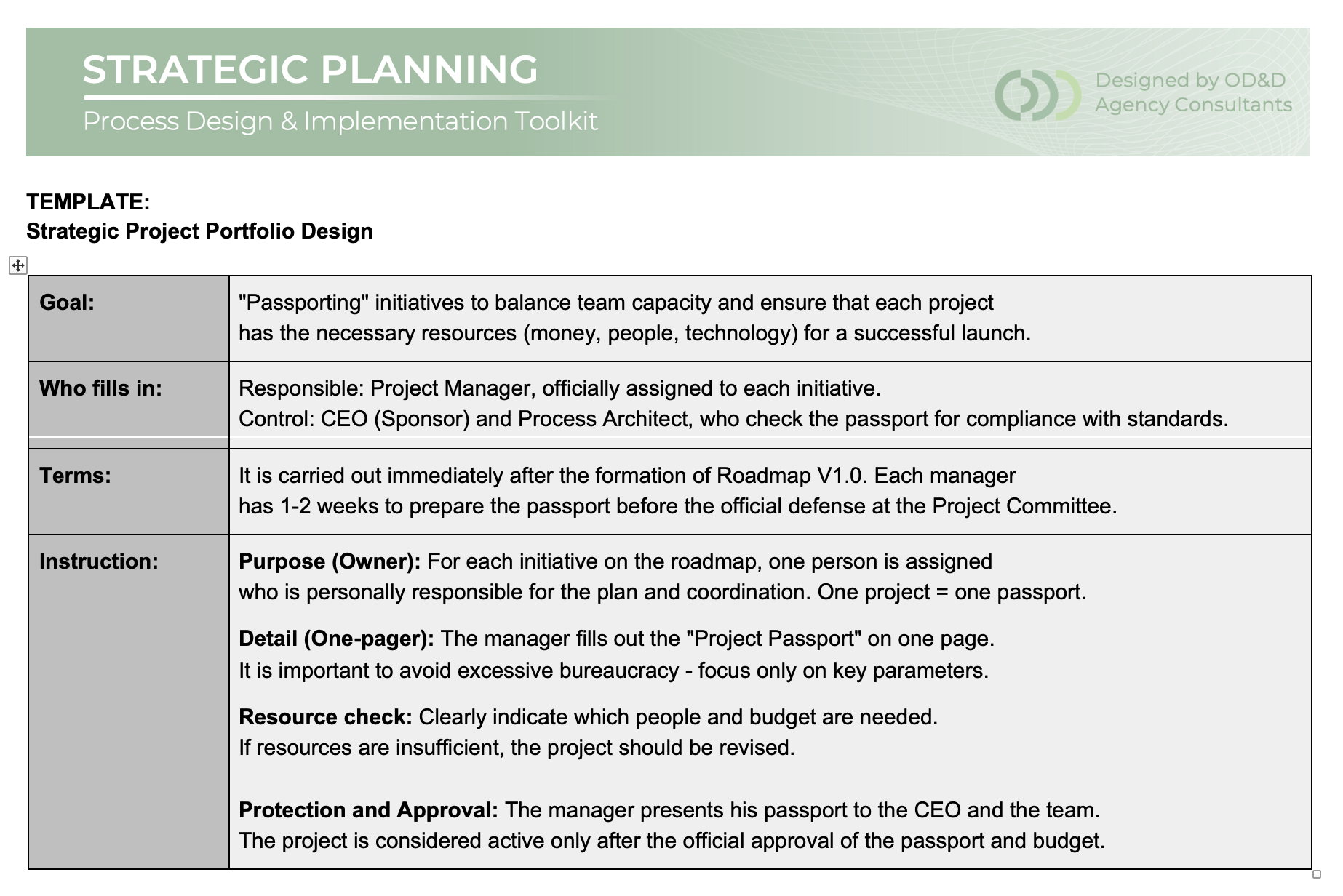
Phase 04
Portfolio Design
Phase 05
Execution Engine
Phase 06
Adaptive Loops
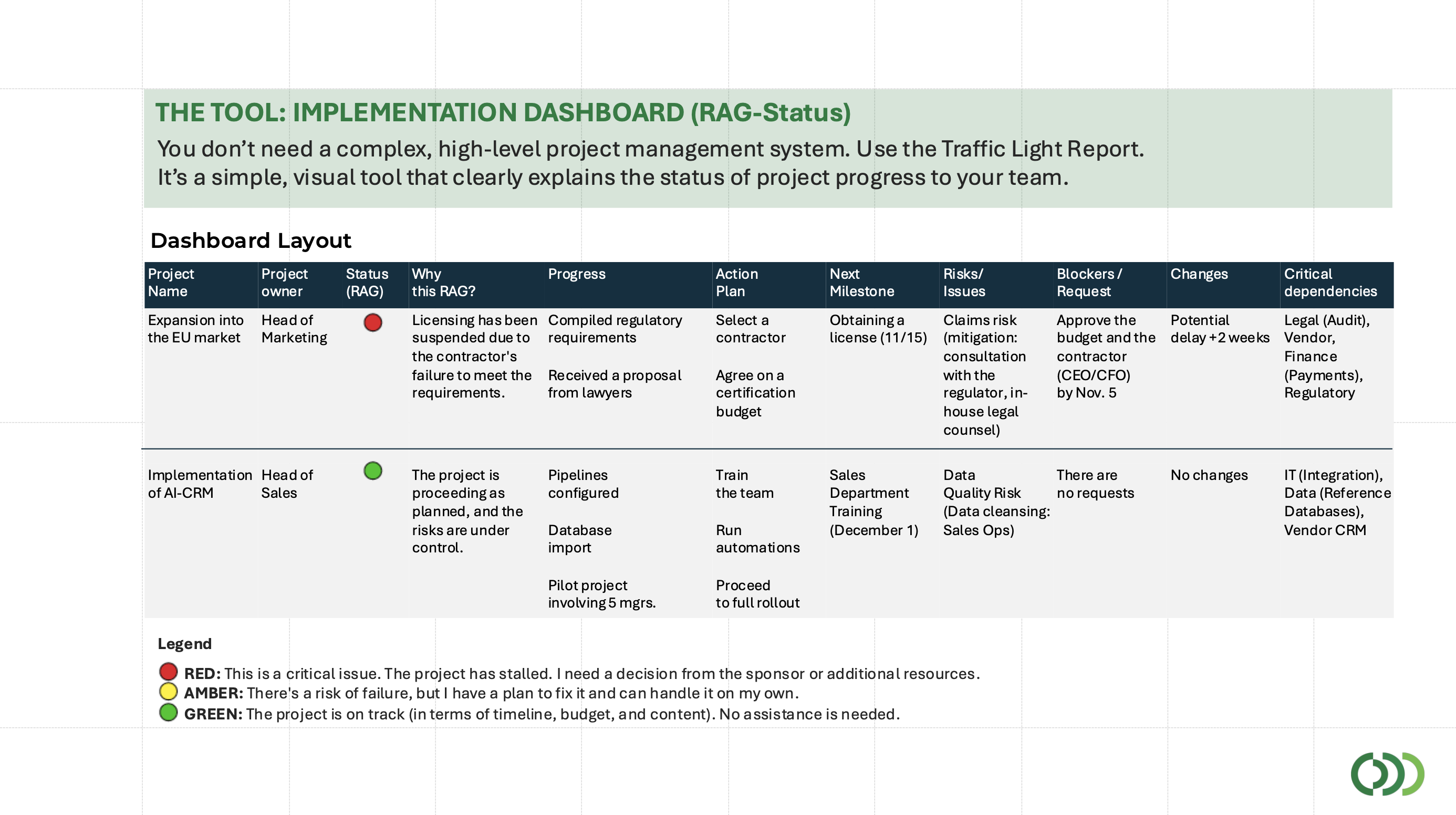
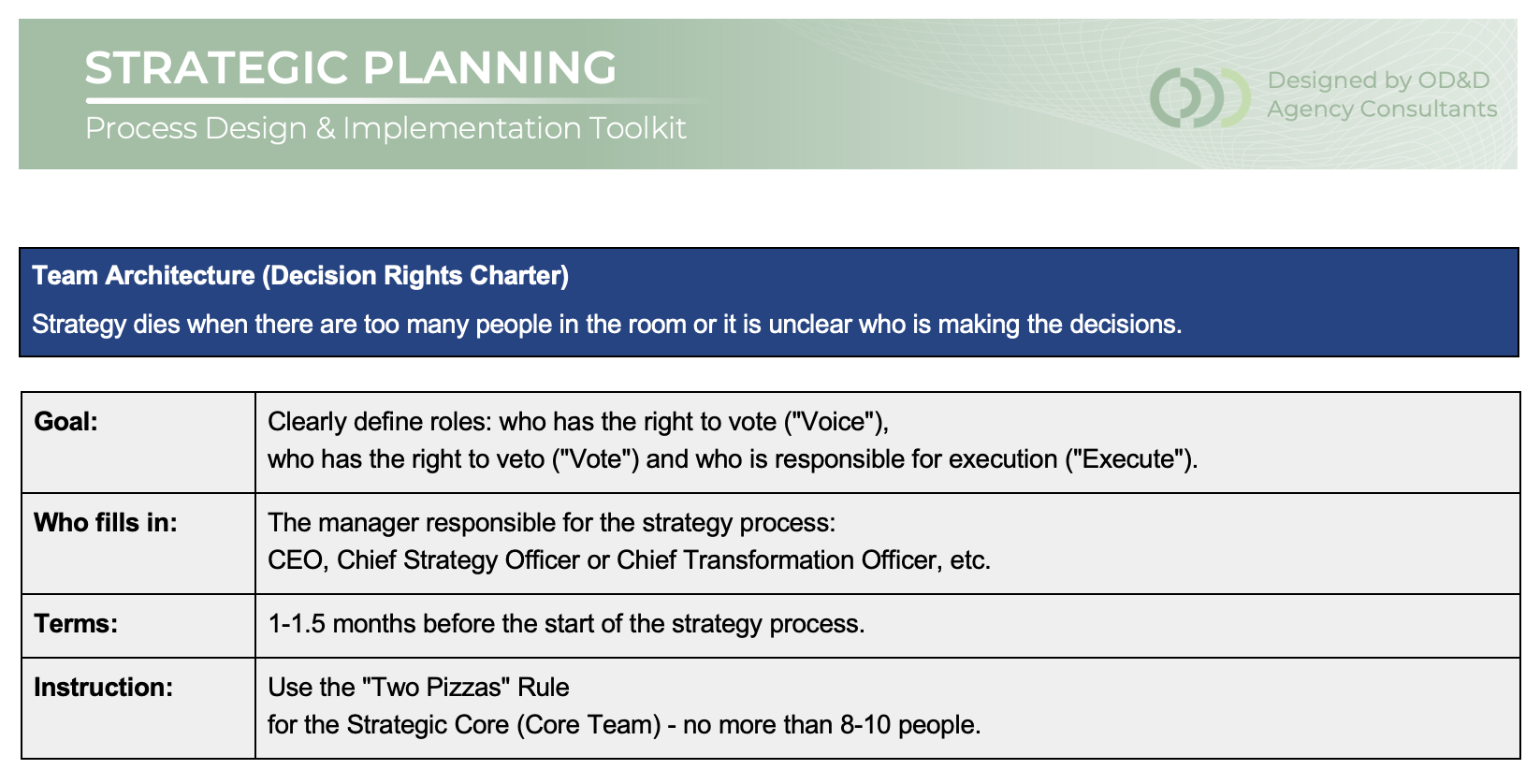
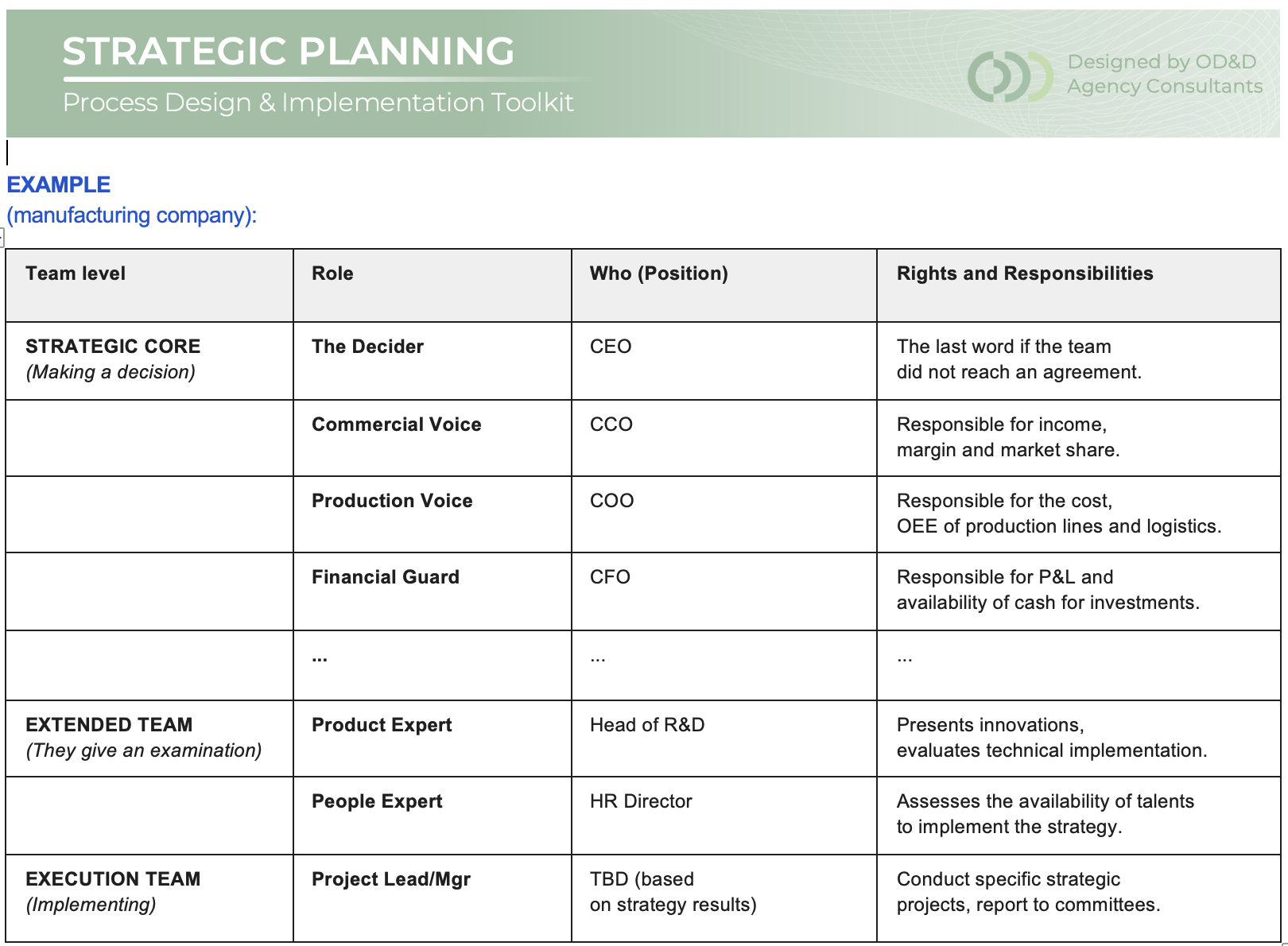
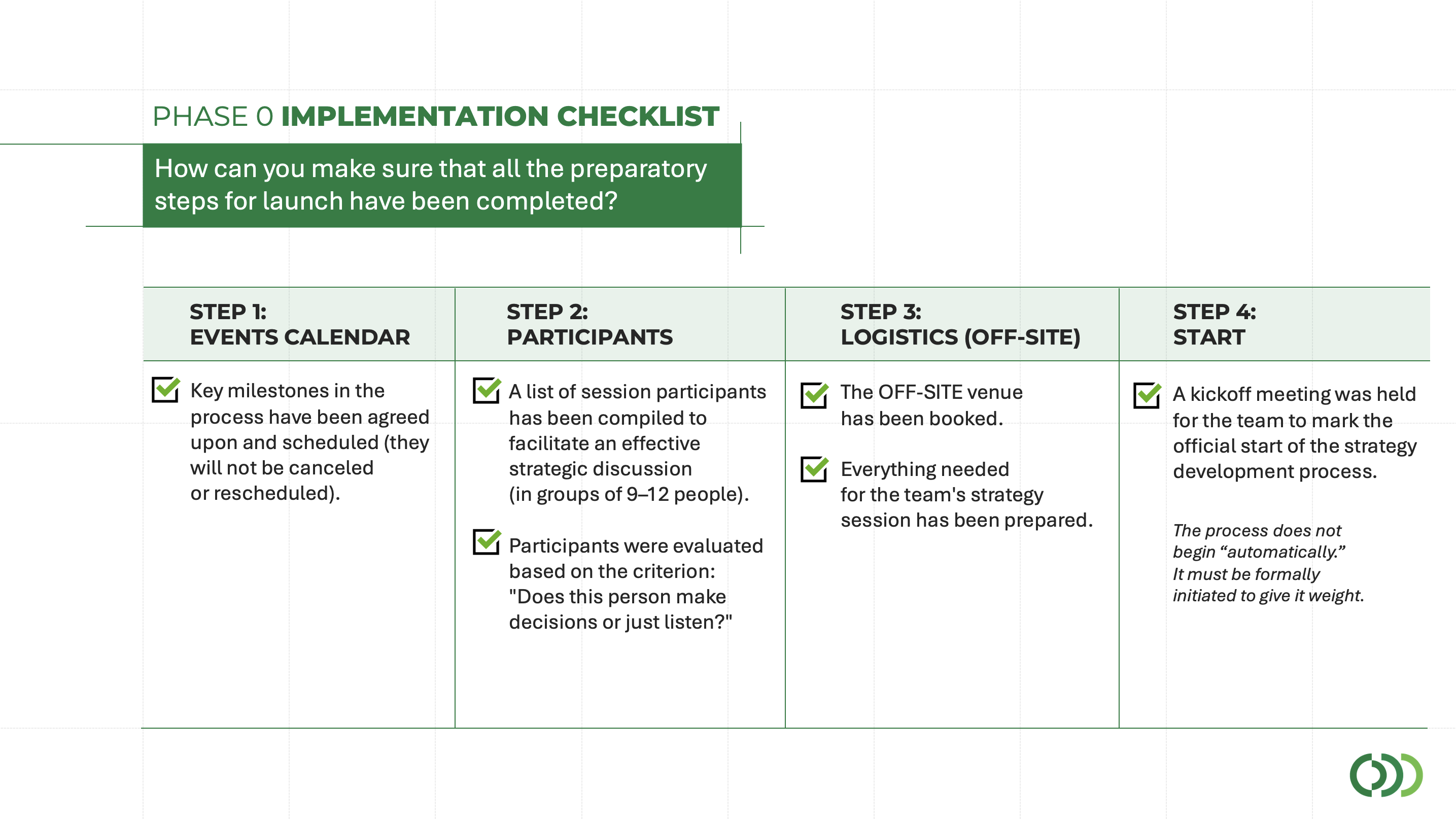
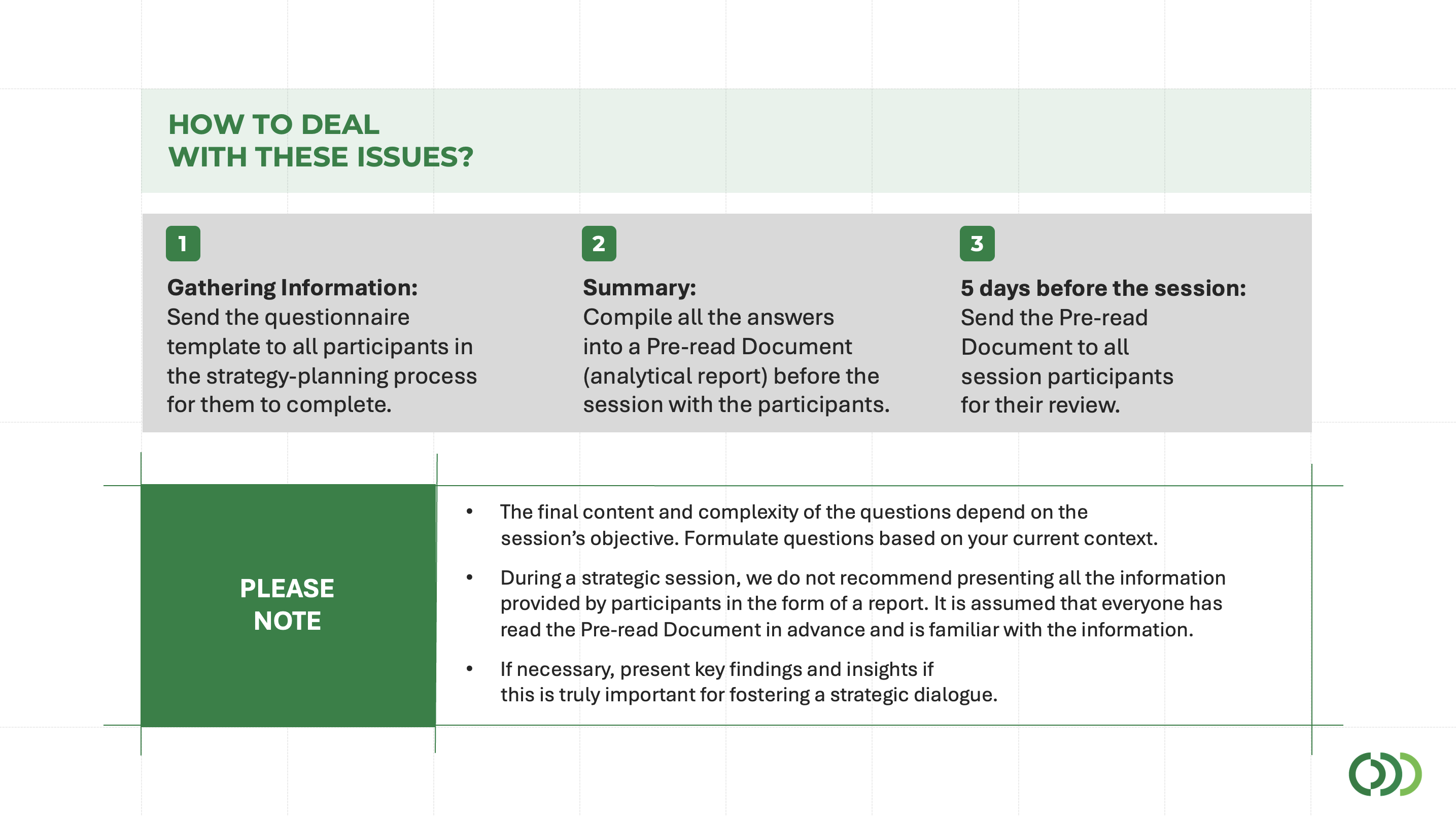
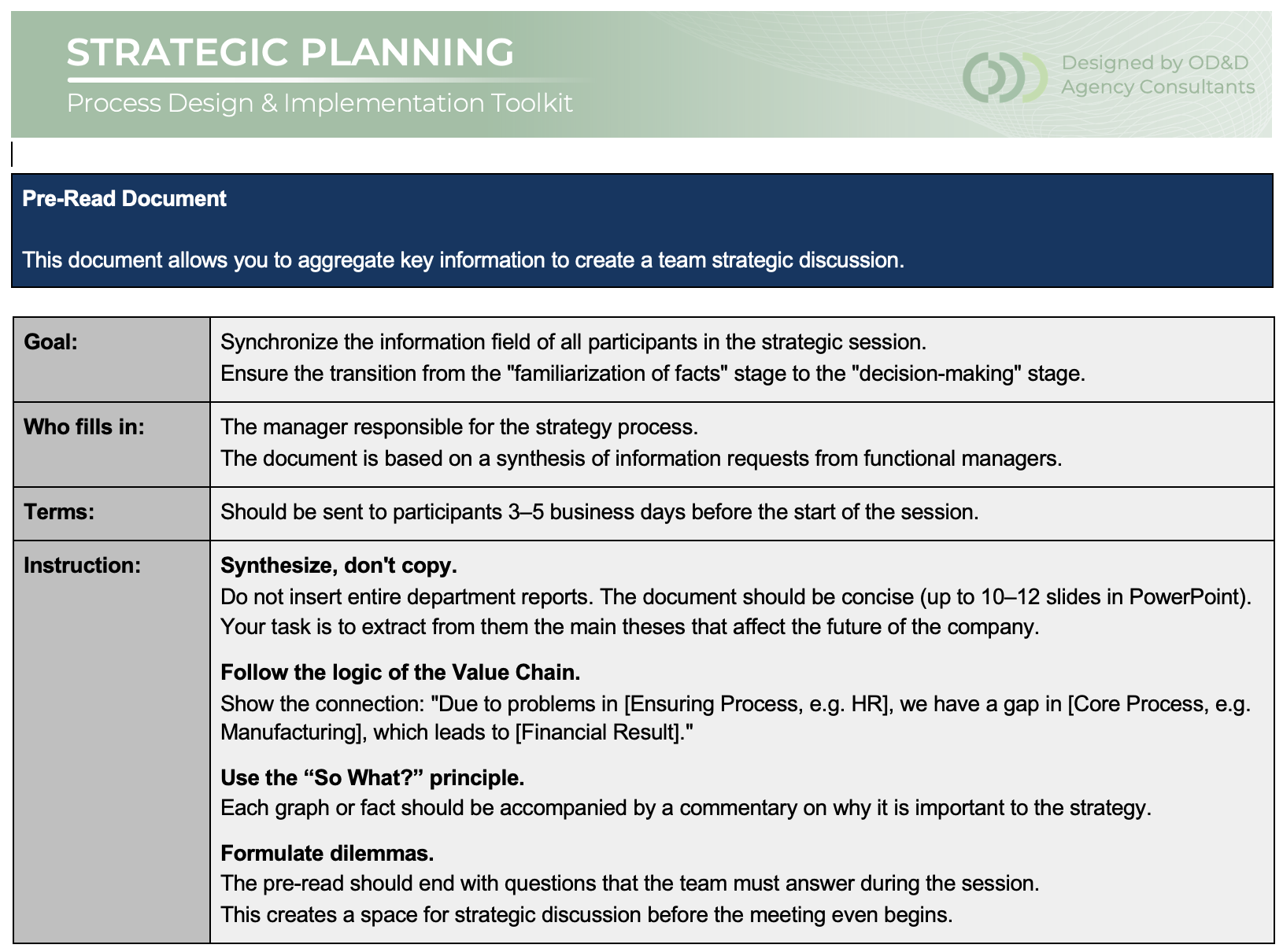
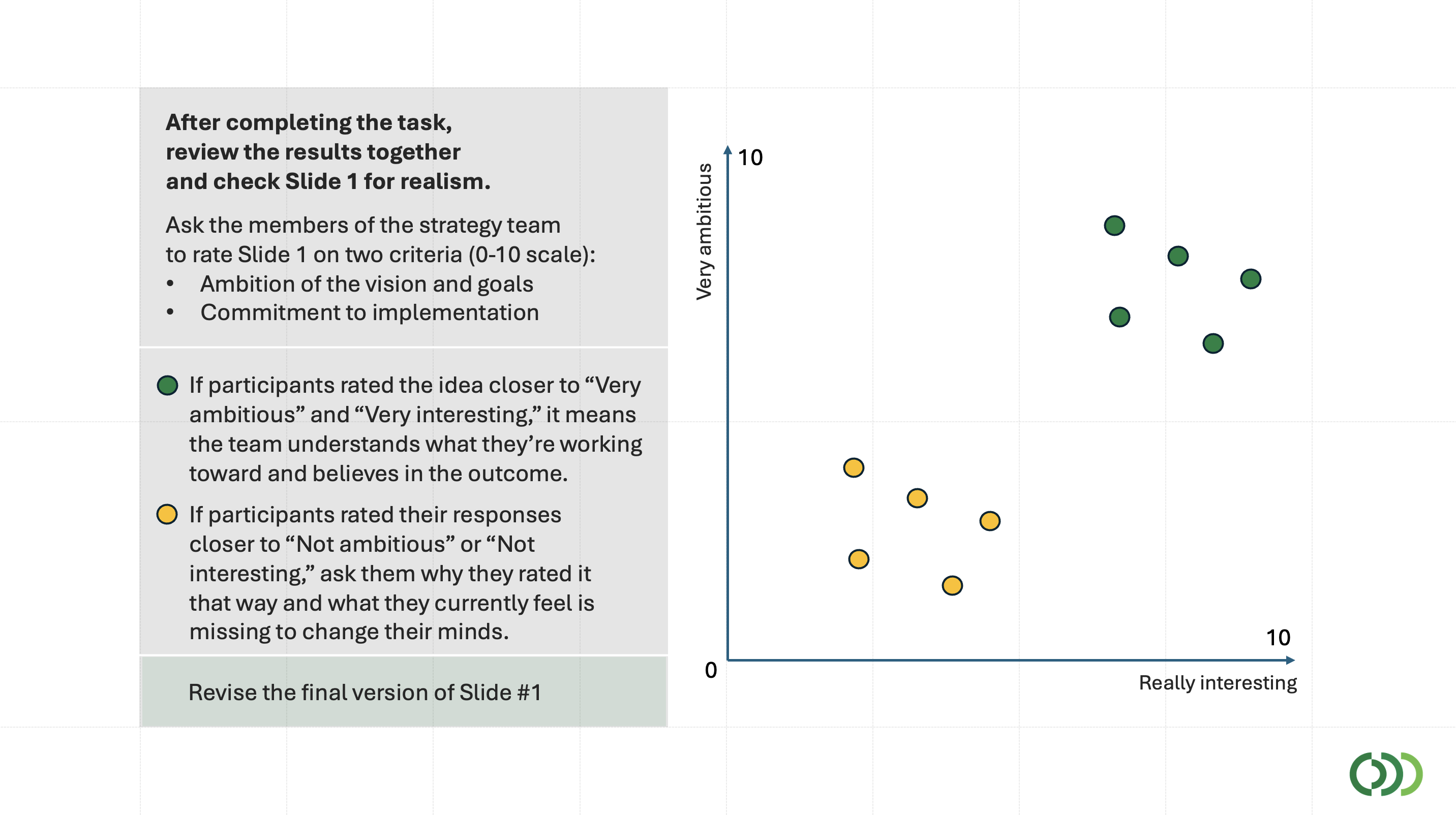
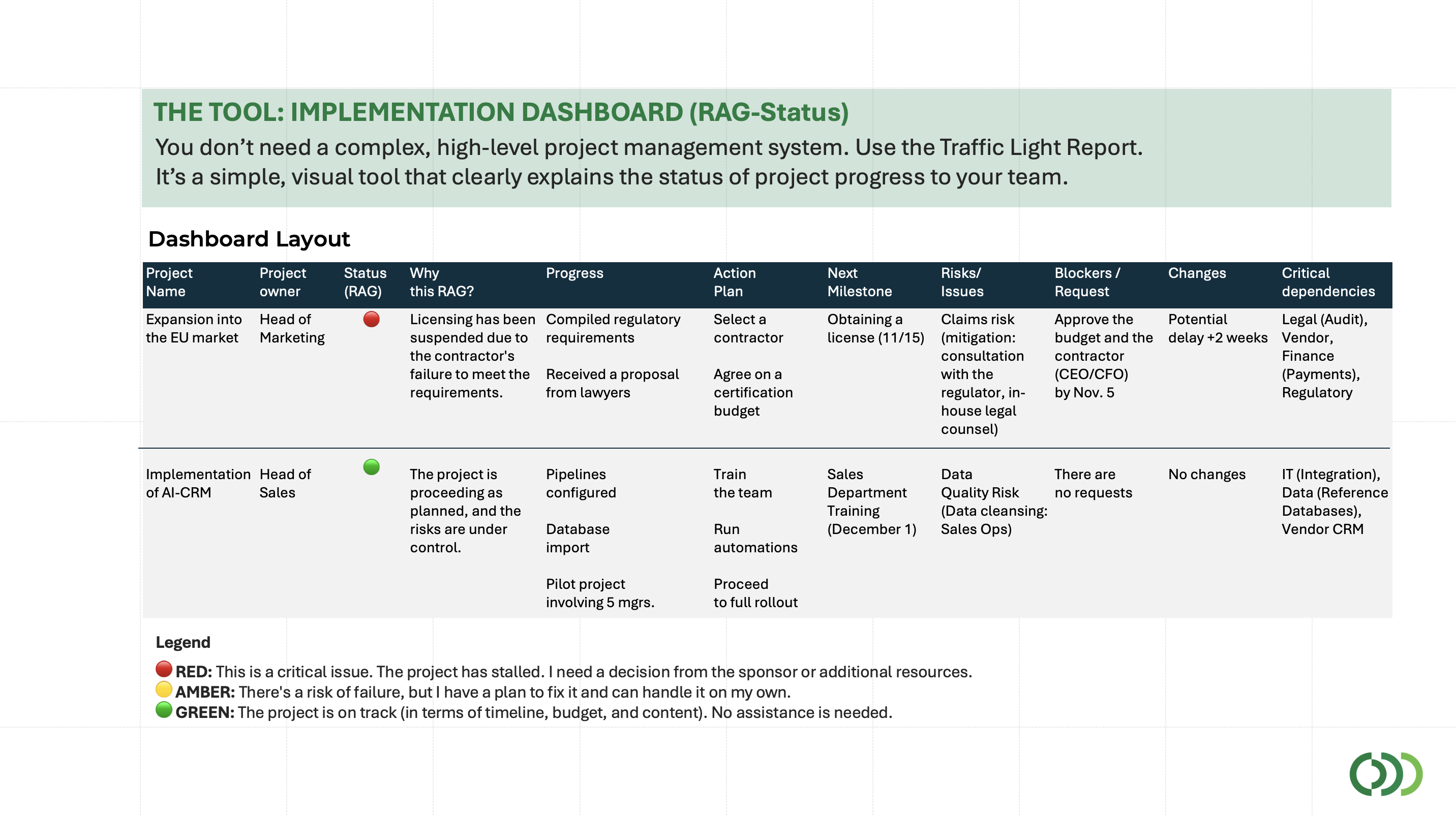
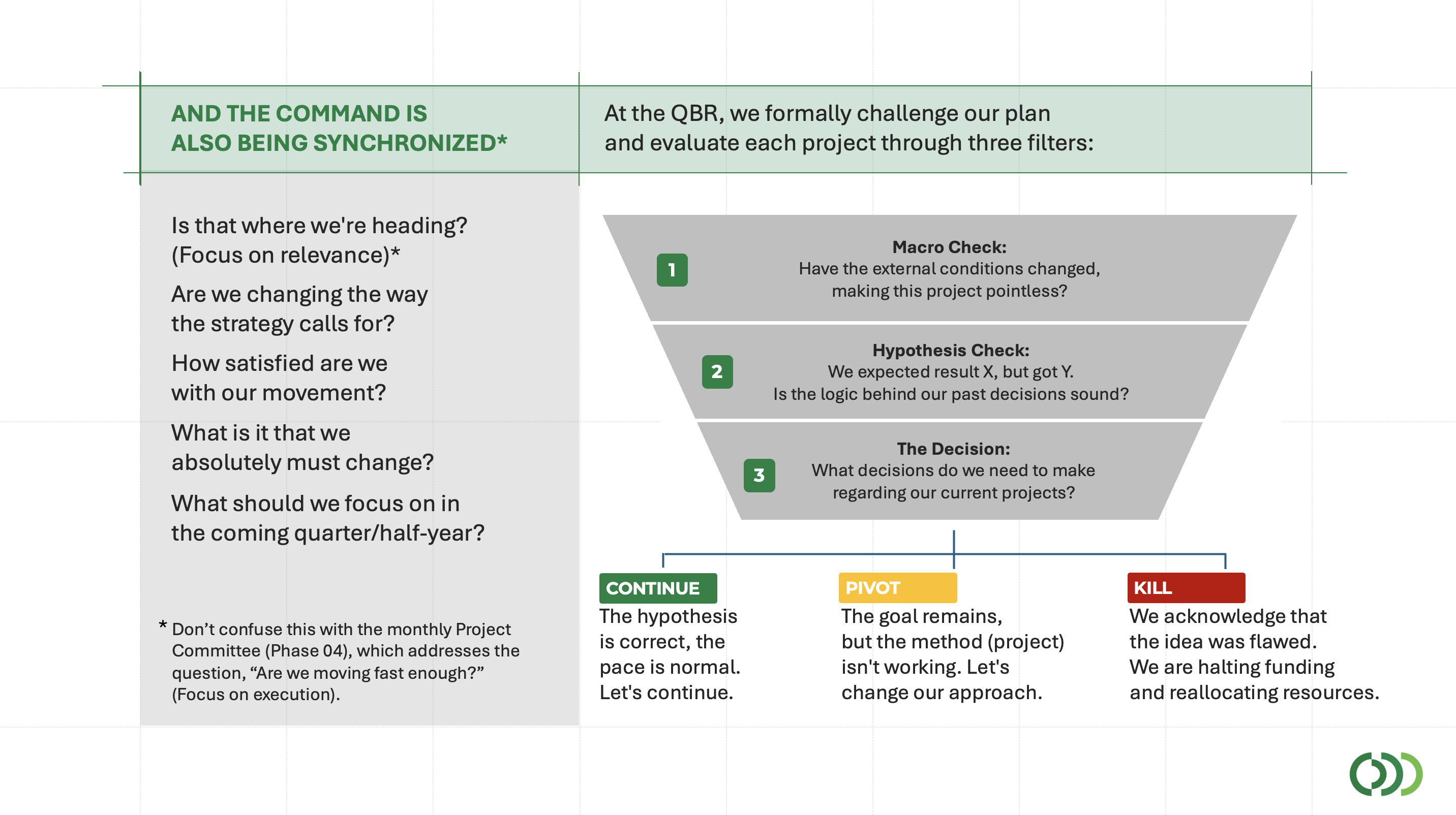
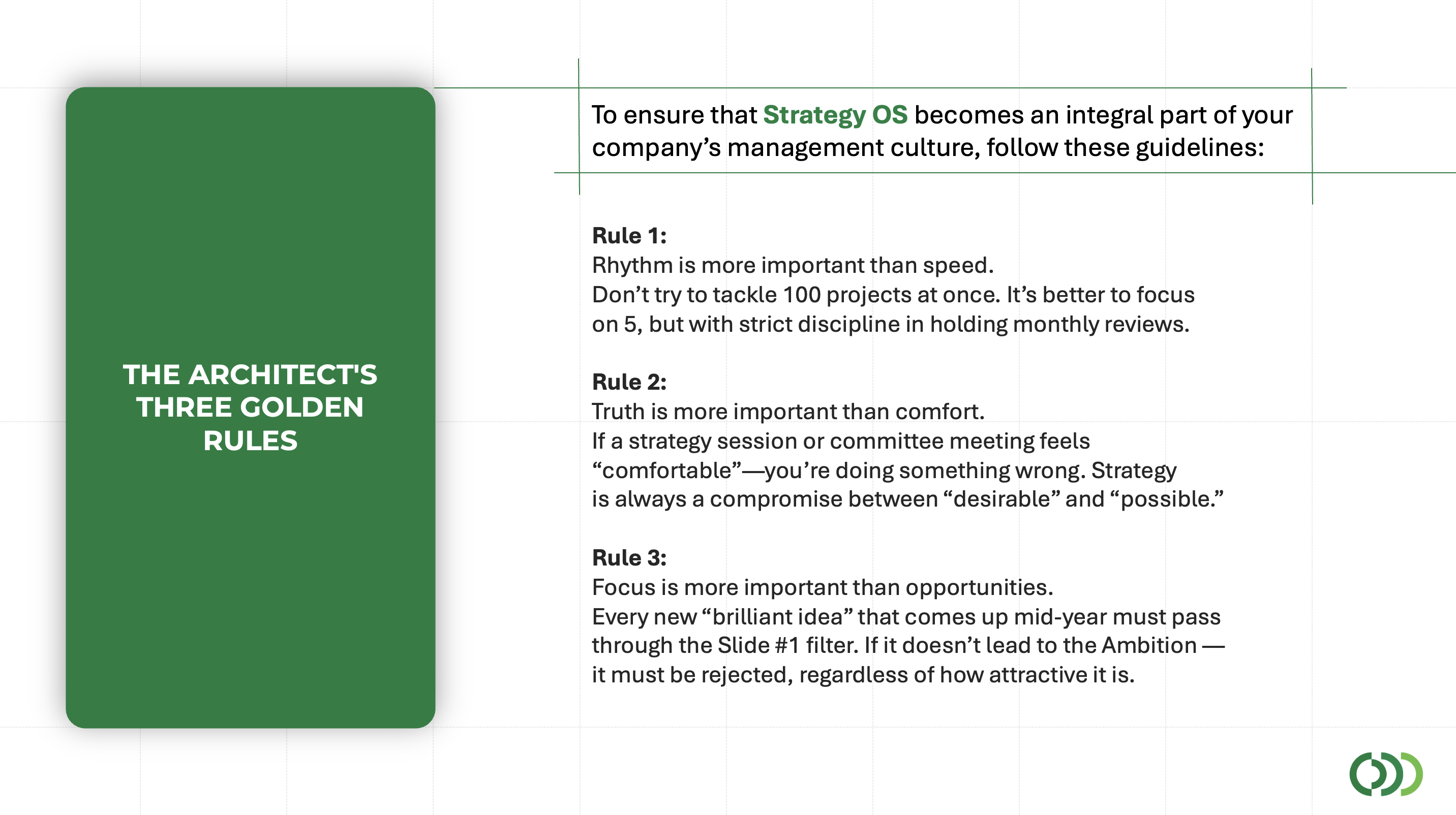
Strategy OS Toolkit Examples


How it works?
Each phase is a set of tools and management practices to build a full cycle of strategy implementation.
Phase 00
Strategic Rhythm
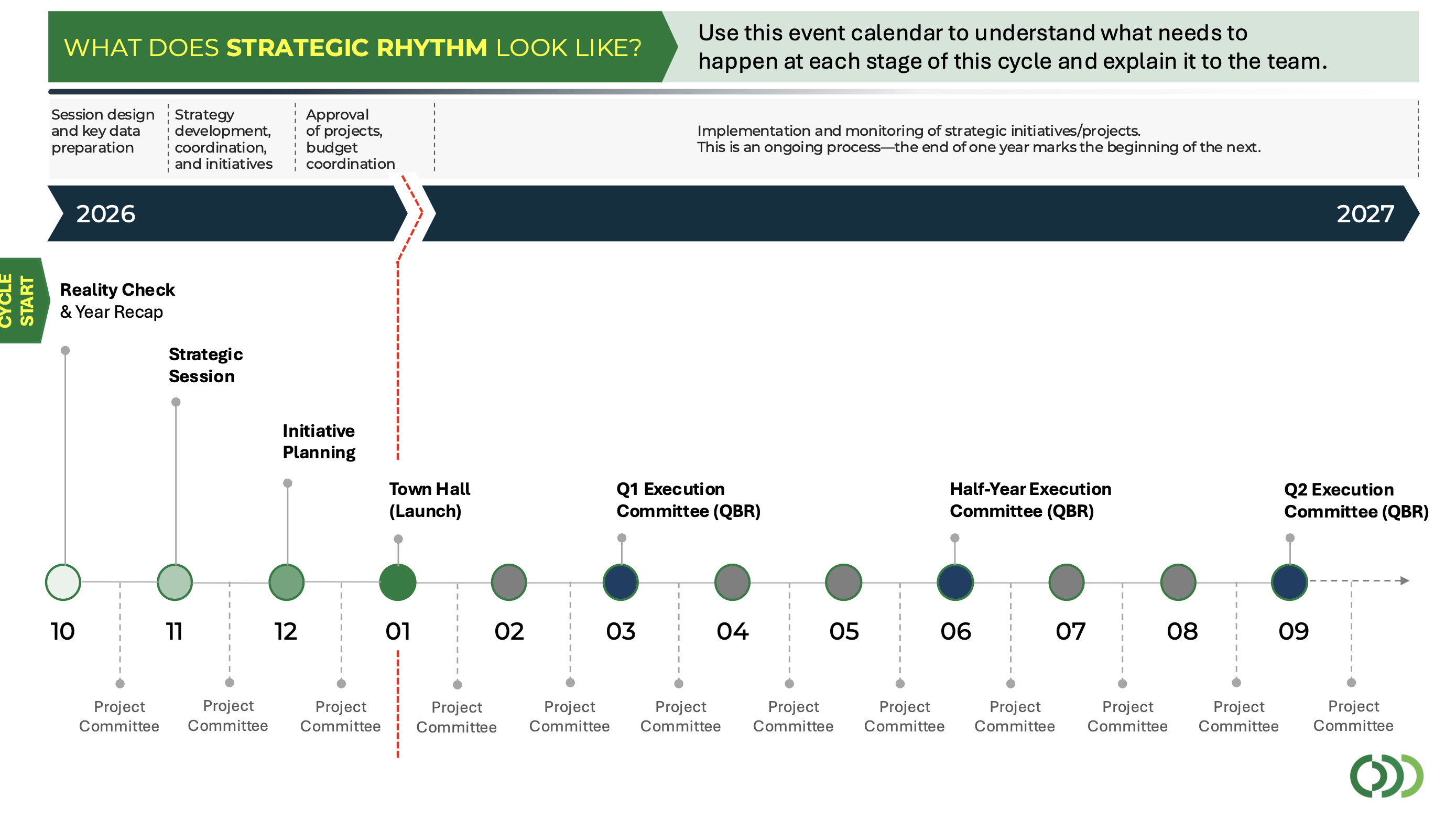
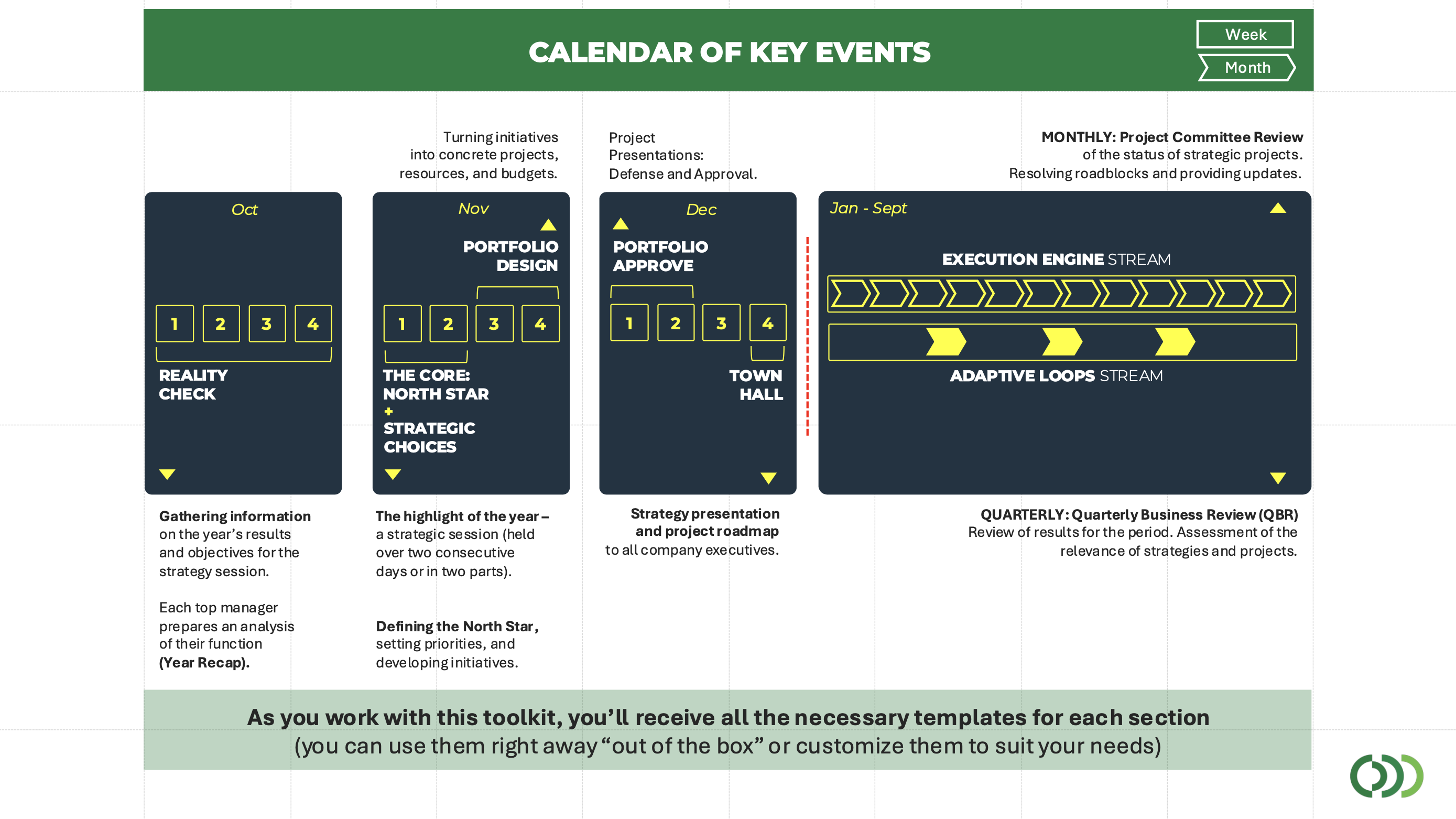
Most companies revisit strategy twice a year: at the beginning and when things go wrong. This phase embeds strategy into a weekly rhythm: predictable cycles of planning, monitoring, and review as an ongoing operational function.

Result: The team knows when we make decisions, when we report, and when we adjust course—without your intervention or reminders. The first changes are noticeable in 2–3 weeks.
Phase 01
Reality Check
Plans based on how you want the company to be, not how it actually is, are expensive illusions. This phase provides a structured view: processes, sales, team, competitors, real growth constraints.

Result: Decisions based on data, not managerial intuition that errs in the convenient direction. You see the real picture without illusions, which allows you to make informed decisions.
Phase 02
The Core (North Star)
When each division optimizes its own, the company as a whole loses. This phase formulates a single strategic goal and makes it the operational compass for all decisions: from budgeting to hiring plans.

Result: The question “what is more important now?” ceases to be a subject of negotiations between departments. You synchronize the energy of managers in one direction — without chaos in priorities.
Phase 03
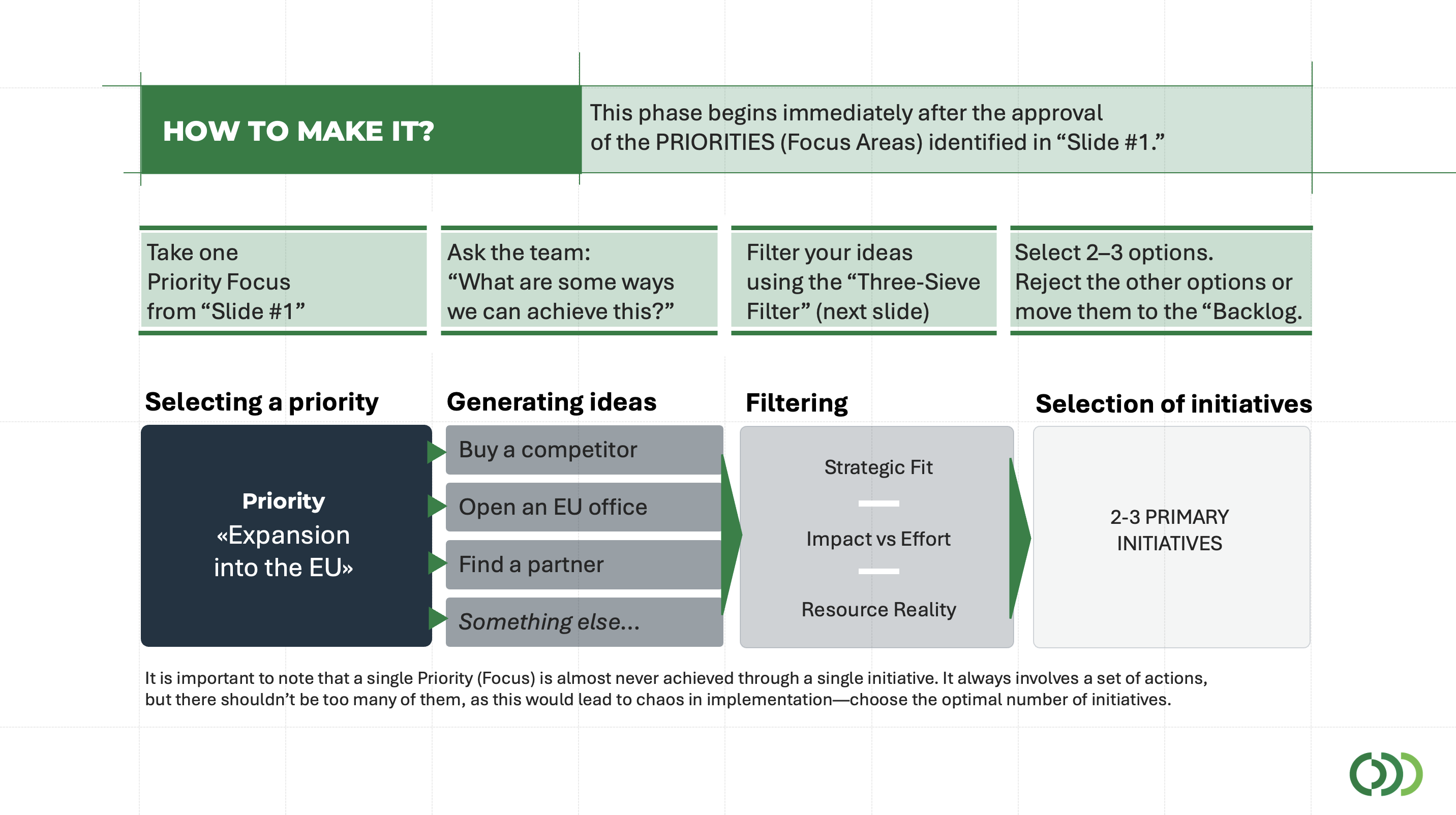
Initiative Planning
“Grow 40%” is the goal. But what does your marketing department do on Tuesday morning to make it happen? This phase decomposes the goal into initiatives with owners, resources, and success criteria that can be verified—not just declared.

Result: Transforming the vision into a clear list of tasks with assigned responsibilities and deadlines. The strategy becomes a work plan, not a slogan on the wall.
Phase 04
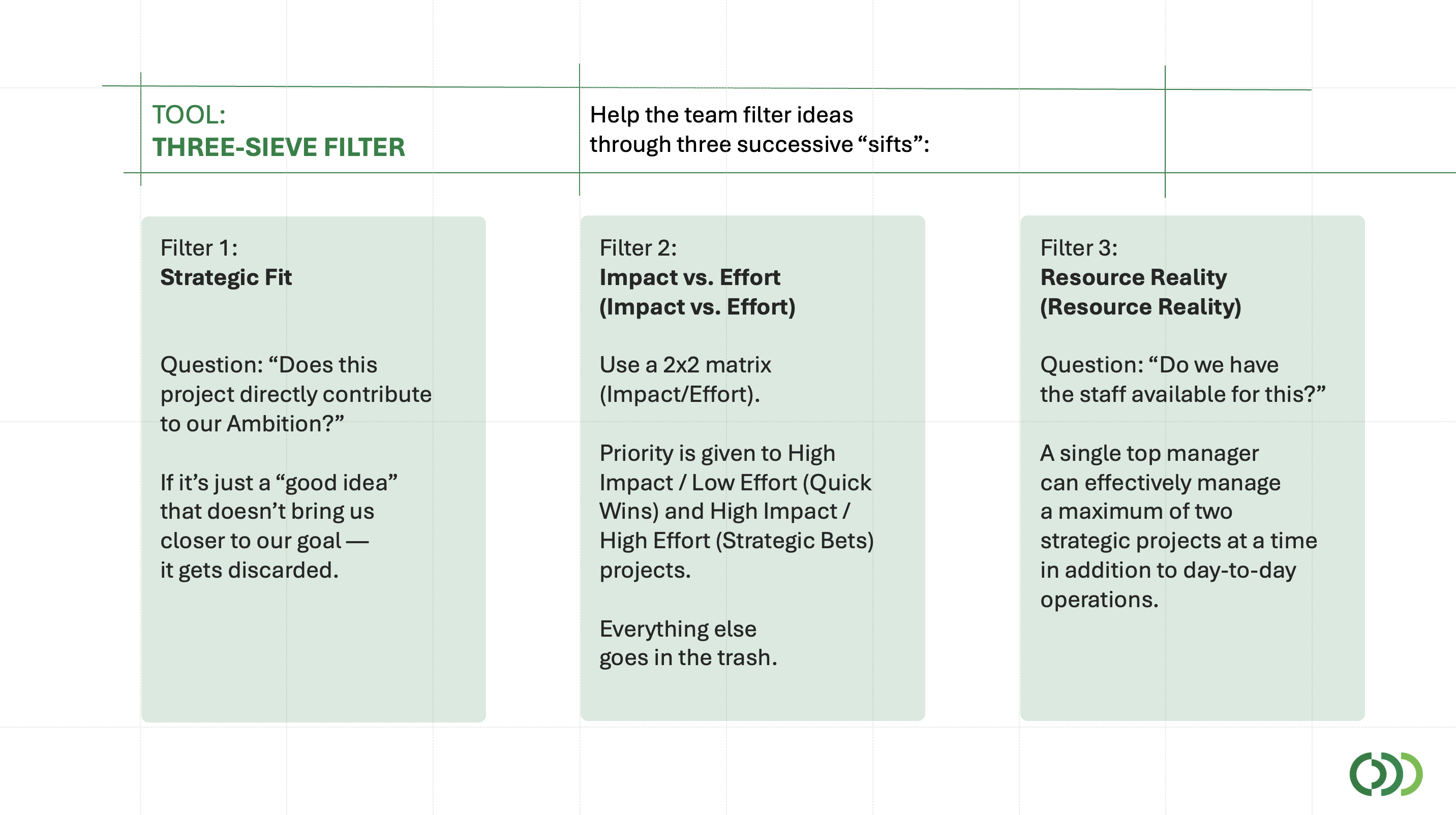
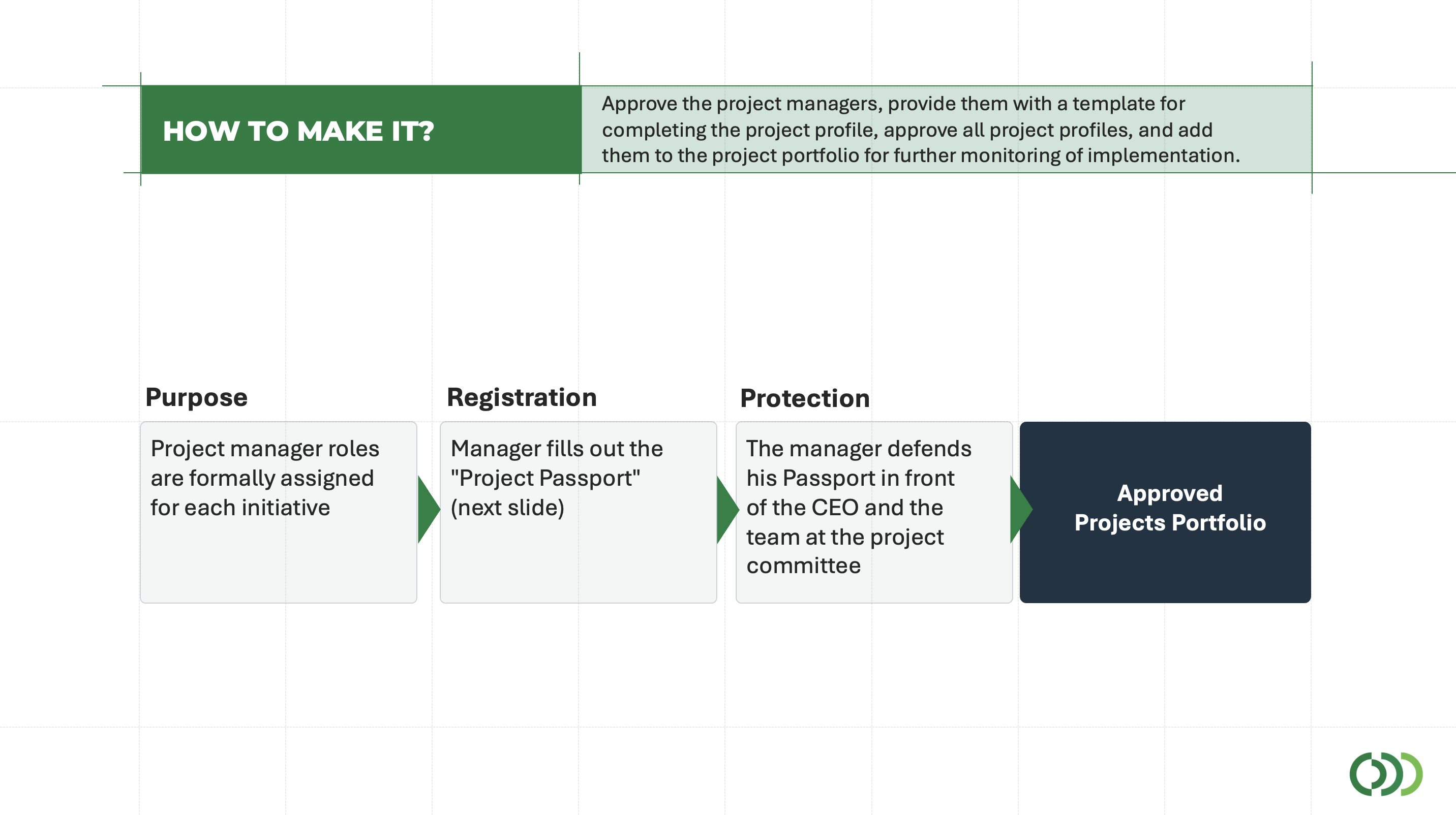
Strategic Projects Portfolio Design
Nothing is officially closed—everything is “on hold.” Resources are scattered, teams are broken, no project is completed with the expected results. This phase introduces one filter: does this project bring us closer to the strategic goal?

Result: Resources are concentrated where they have the greatest impact. Fewer unnecessary projects, higher completion rates, and a tangible contribution of each project to the strategic goal.
Phase 05
Execution Engine
There is often a gap between the decision at the meeting and the actual result. Not because the team doesn’t try. But because there is no standard verification loop. This phase builds it through PDCA cycles: deviations are visible immediately, errors are corrected before they become a crisis.

Result: Execution becomes a process—not a matter of personal pressure on your part. You get an execution system where every step allows you to qualitatively implement strategic changes.
Phase 06
Adaptive Loops
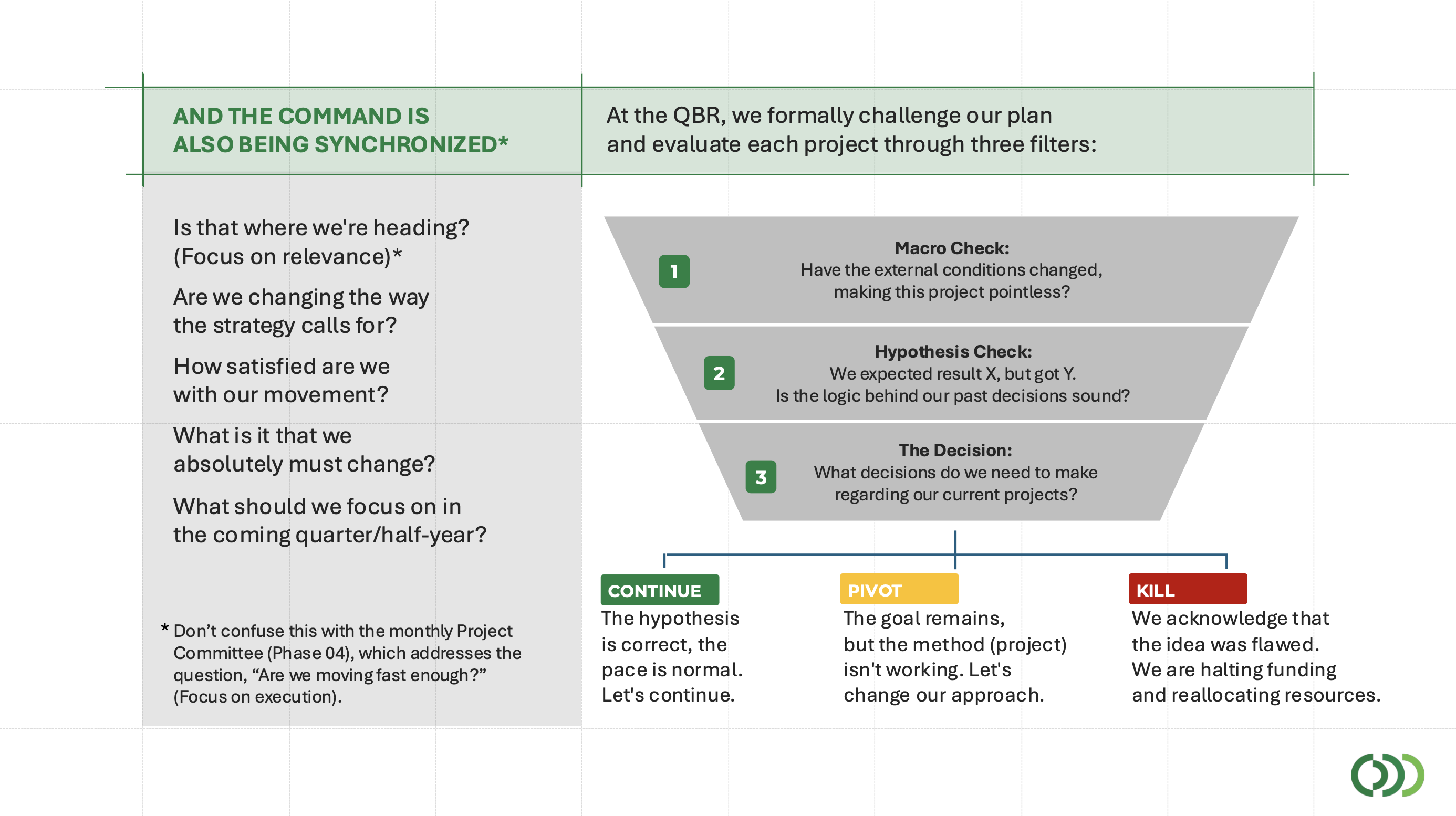
A strategy designed for a stable market becomes obsolete before the end of the planning year. This phase builds into the operational rhythm a regular review of basic assumptions—without restarting the entire strategy process.

Result: Changing conditions become an expected parameter with a ready response—rather than a cause for confusion. You can quickly change tactics without losing sight of your strategic goal.
The Transformation
What changes when the system is "installed"
BEFORE IMPLEMENTATION
The company is sustained by the leader's personal energy. He maintains priorities, reminds of deadlines, pulls out stuck projects, brings the team back on strategic course after every storm.
It works — but only to a certain extent.
And it comes at a cost in time and burnout.
AFTER IMPLEMENTATION
The company is held together by a system.
The team knows its priorities without constant reminders. Deviations are visible before they become a crisis.
You finally spend time on what a manager is there for — the strategic level, not operational firefighting.
What leaders say
"We didn't have a strategy problem. We didn't have a rhythm. After implementing the system, for the first time, the team stopped asking me what the priority was — they knew."
Victor,
VP Strategy, Fintech Company
"We've already tried OKR and BSC. Each time we implemented the methodology, and after six months it fell apart. Strategy OS is different — it builds a system that doesn't allow goals to get lost."
Anna,
CEO, Merіdian Partners
"Strategy OS doesn't stop at planning — it builds an execution system. For us, this was a fundamental difference."
Inga,
HRD, CPG Global Company
"During the strategizing process, it turned out that half of our projects had no direct connection to the strategic goal. An uncomfortable discovery. But it gave us the focus we had been lacking for years."
Alexander,
COO, Nexus Group
Choose your implementation format
Join 500+ teams that have already implemented Strategy OS.
SELF-GUIDED
The Toolkit
Everything you need to implement Strategy OS independently across your organization
$149
one-time
All 7-Phase Guides
30+ Professional Templates
Filled Examples
SELF-GUIDED
Toolkit + Consultation
Full toolkit plus 60-minute 1-on-1 onboarding session with an OD&D Agengy strategist
$299
one-time
Everything In Self-Guided
60 min Onboarding Call
Custom Rollout Roadmap
ENTERPRISE
Enterprise Customization
Tailored adaptation for Holdings, Groups and Complex Multi-BU organizations
Custom
by inquiry
Everything in Toolkit & Consult
Dedicated Account Manager
Personalized Rollout Strategy
OD&D Implementation Support
30 Days "No Question Asked" Money-Back Guarantee
Try Strategy OS for a full 30 days. If after implementing the first phase you don't feel that the chaos has decreased, we will refund your money. All materials will remain with you as compensation for your time.
There is another question that you should answer honestly.
How much did the last year without a clear system cost your company?
Not abstract. Specifically:
How many resources were spent on projects with no direct connection to the strategic goal?
How many decisions are made based on feelings rather than verified data?
How much of your personal time is spent on operational issues instead of strategic ones?
P.S. You can leave this page and not change anything. But let's be honest: if the chaos hasn't gone away on its own in the past year, it won't go away tomorrow. You'll continue to waste focus on small things and lose results while the great potential of your leaders burns in the operating room. Make a choice in favor of the system - all the answers are in the toolkit.
Got Questions? We've Got Answers.
We already have OKR / BSC / our own methodology. Does it make sense?
Strategy OS doesn't replace what you have. It adds an operational execution layer on top of any framework. If you have a goal-setting system, Strategy OS provides a mechanism to ensure that you achieve them.
How long will the implementation take?
Phase 00 — first results in 2–3 weeks. Full cycle — 90 days at standard pace. You move at the pace of your organization.
Who leads the implementation?
The Self-Guided Toolkit is designed for self-deployment by the management team. If you want the involvement of an OD&D consultant, there is the Toolkit + Consulting option.
We’ve tried to implement similar before and were disappointed.
Most toolkits provide a framework for planning — but not an execution system. That’s why they fall apart. Strategy OS is built around execution: not what to plan, but how to make the planned happen.
Is it suitable for a holding company or group of companies?
Yes, and this is one of the key profiles of our practice. For structures with several business units, there is a customization of the methodology. Write to us - let's discuss your context.